
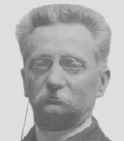
Lluis Domenech I. Montaner (1850-1923)
In Catalonia:
In Barcelona:
Fuster House
Lamadrid House
Lleó Morera House
Thomas House
Museum of Zoology
Editorial Montaner i Simón
Sant Pau Hospital
Palau de la Música Catalana
Ramon Montaner Palace
In Canet de Mar:
Ateneu Obrer
Domènech i Montaner House
Roure House (Ca la Bianga)
Santa Florentina Castle
In Olot:
Solà-Morales House
In Reus:
Gasull House
Navàs House
Rull House
Pere Mata Institute
Out of Catalonia:
Cemetery
(Comillas-Spain)
“Tres caños” fountain (Comillas)
Gran Hotel (Palma de Mallorca)
Pontifícia University (Comillas)
Life:
Born in Barcelona in 21 December 1850, Lluís Domènech i Montaner had shown his passion for architecture from a young age.
He initially studied physics and natural sciences, but after two courses in Madrid studying Engineering, he decided to study architecture. He became an architect in Barcelona in 1873.
From his position as a Professor and Director of the Escola d’Arquitectura de Barcelona (Barcelona School of Architecture), he exerted a major influence in the development and expansion of Modernisme (Art Nouveau).
The role of Domènech i Montaner (1849-1923) was essential to defining the “Modernisme Arquitectonic” (architectural Art Nouveau) in Catalonia. His article “En busca d’una arquitectura nacional” (In search of a national architecture), published in the review “La Renaixença”, shows the way to attempt a modern architecture expressing the national Catalan character.
His buildings reveal a mixture between rationalism and the fabulous ornamentation inspired in the Hispano-Arabic architecture and the curvilinear motifs typical of Art Nouveau.
In the Restaurant of the Park de la Ciutadella of Barcelona (1888) (at present Museum of Zoology), he applied very advanced solutions (iron structure and ceramics) developing them later in the Palau de la Música Catalana (1908) – whic has a fantastic coverage of mosaic, ceramics and polychrome glass, as well as in other buildings erected after this time.
These features are also present in his greatest architectural ensembles: The Hospital de Sant Pau in Barcelona and the Institut Pere Mata in Reus.
An interesting characteristic of Domènech i Montaner’s work is the evolution towards lightness that is evident in the Palau de la Música Catalana and wich is the very opposite to the weighted structures of Gaudí (see La Pedrera)
Collaborators:
Domènech i Montaner had the help of the best Catalan specialists in the applied arts relating to his architecture, such as architects, sculptors and craftsmen (Contractors, decorators, specialists in forgig, smelters, carpenters, glassworkers, ceramists, plasterers, etc.), all of them developing in their own fields, an enormous body of work wich was essential to assuring an extraordinary quality in the architect’s designs. Naturally, given the passage of time and historical vicisitudes, much of the information available on this individuals has been lost, but we can still get to know many of these exceptional technicians and workers, some of whom we mention next:
Architects:
Antoni Maria Gallissà i Soqué
Josep Maria Jujol i Gibert
Sculptors:
Eusebi Arnau i Mascort
Craftsman:
Contractors: Josep Bayo
Decorators:
Specialists in forging:
-
Germans Badía
Lluís Badía
Vallet i Piqué
Smelters: Manyach
Carpenters: Casas i Bardé
Glassworkers: Tallers Pelegrí
Ceramists: Sebastiá Ribó
Plasterers: Joan Beltrán
| Title of book | Author | Published by | Year |
| Domènech i Montaner | Bassegoda Nonell, J | Edicions de Nou Art Thor | 1986 |
| Lluís Domènech i Montaner | Bohigas, Oriol | Lluís Carulla i Canals | 1973 |
| Lluís Domènech i Montaner | Borrás, M.Ll. | La Poligrafa | 1970 |
| Inventario general del Modernismo | Pons Toujouse, Valentí | Ediciones del Serbal | 2006 |
| La Iniquitat de Casp i la fi del comtat d’Urgell : estudi histórico-polític |
Domènech i Montaner, Lluís |
||
| El Palau de la Música Catalana de Lluís Domènech i Montaner |
Domènech i Montaner, Lluís Photos: Marc Llimargas |
Lluís Domènech i Girbau | |
| Escrits polítics i culturals : 1875-1922 |
Doménech i Montaner, Lluís |
Maria Lluïsa Borràs |
|
| Ensenyes nacionals de Catalunya : estudi històric |
Domènech i Montaner, Lluís i Domènech i Roura, Felix |
||
|
Lluís Domènech i Montaner (1849-1923) El llegat arquitectònic polític i cultural a Canet de Mar |
Sàiz i Xiqués, Carles | Edicions Els 2 Pins | 2008 |
Other Catalan Art Nouveau Architects
Antoni Gaudí i Cornet
Lluís Domènech i Montaner
Josep Puig i Cadafalch
Antoni Maria Gallissà i Soqué
Josep Maria Jujol i Gibert
Cèsar Martinell i Brunet
Manel Joaquim Raspall i Mallol
Joan Rubió i Bellver
Enric Sagnier i Villavecchia
Salvador Valeri i Pupurull
and others
