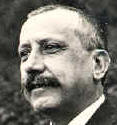
Joan Rubio i Bellver (1870-1952)
Works
In Catalonia:
In Barcelona:
Arc-bridge of the Bisbe
Balmes Library
Alemany House
Canals House (Torre dels Matons)
Casacuberta House
Manel Dolcet House
Fornell House
Macari Golferichs House
Rialp House
Ripol House (demolished)
Roig House (La Torre dels pardals)
Roviralta House (El Frare Blanc)
Lluís S?nchez House
Isabel Pomar House
Foment de la Pietat Church
Tibidabo Sanatorium
University, Ramon Llull College, Chapel
University, Ramon Llull College, Residence
University, Ramon Llull College, School of work
University, Ramon Llull College, Main entrance
In L’Alforja:
Mas d’en Perdiu
In Campdev?nol:
Hospital
In Igualada:
Asylum of Sant Crist
In Manresa:
del Carme Church
In Santa Coloma de Cervell?:
Houses of Colonia Güell
Ca l’Espinal
Ca l’Ordal
Cooperativa
In Raimat:
Caves Raimat (Cellars)
In Reus:
Serra House
In Ripoll:
Chapel of Sant Miquel de la Roqueta
Bonada House
In Sant Feliu de Codines:
Can Trinxet
Puigdom?nech House
In Balearic Islands:
In Palma de Mallorca:
Casa Miquel Benimelis
In Manacor:
Monastery of Santa Família (demolished)
In S?ller:
S?ller Bank
Sant Bartomeu Church (fa?ade)
In Son Servera:
L’Església Nova (The new Church)
Life
Born in Reus (Baix Camp – Catalonia) on 24 April 1870.
Joan Rubio i Bellver received his degree as an architect in 1893.
He was a member of the last Art Nouveau generation. He was an assistant to Gaudí, working with him between 1893 and 1905 on la Sagrada Família, in Casa Batllo and on Park Güell.
He was one of the most important synthesizers of the architectural ideas of Gaudí. considered that Gaudí’s designs and structures provided solutions to problems raised by 19th Century eclecticism.
In 1905 he was elected a councillor of Barcelona city.
He was also the architect to the Diputaci? de Barcelona (Barcelona Province administration), for which he participated in projects such as the reconstruction of Casa dels Canonges (Generalitat de Catalunya – Catalonia government) in Barcelona City.
The work of Joan Rubio i Bellver is very important and is present all over Catalonia. His most interesting buildings are: the Casa Macari Golferichs (1901), the House Roviralta – El Frare Blanc – (1903), the Escola Industrial (Old Industrial School) (1912), and the Saint Christ Asylum in Igualada.
Rubio died in Barcelona on 30 November 1952.
Specific
|
|||
| Title of book | Author | Published by | Year |
| Joan Rubio i Bellver | J. Gomez Serrano and others | ||
| Joan Rubio i Bellver y la fortuna del gaudinismo | I. de Sola-Morales i Rubio | ||
|
Joan Rubio i Bellver: Arquitecte Modernista |
M. de Sola-Morales i Rubio |
C.O.A.C. / Col. legi Major Ramon Llull, Universitat de Barcelona |
2.007 |
Other Catalan Art Nouveau Architects
Antoni Gaudí i Cornet
Lluís Domènech i Montaner
Josep Puig i Cadafalch
Antoni Maria Gallissà i Soqué
Josep Maria Jujol i Gibert
Cèsar Martinell i Brunet
Manel Joaquim Raspall i Mallol
Joan Rubió i Bellver
Enric Sagnier i Villavecchia
Salvador Valeri i Pupurull
and others
