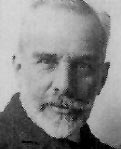
Enric Sagnier i Villavecchia (1858-1931)
Works
In Barcelona:
Jesús i Maria School
Monastery of Pompeia
Caixa de Pensions
Jesuits Chapel
Salesian School
New Customs
Palace of Justice
Temple of Tibidabo
Arnús House (El Pinar)
House Rafael Barba
Josep J. Bertrand 1 Houses
Josep J. Bertrand 2 Houses
Josep J. Bertrand 3 House
Joan Coma House
Josep Fabra House
Miquel A. Fargas House
Ferran Cortés House
Ferrer-Vidal House
Rupert Garriga Nogués House
Rupert Garriga Nogués 2 House
Rodolf Juncadella House
Marquès de Julià House
Romà Macaya House
Camil Mulleras House
Ramon Mulleras House
Francesc Pastor House
Isidre de Pedro House
Gustau Peyra House
Pons i Pascual Houses
Enric i Victorià de la Riva House
Victorià de la Riva House
Antoni Roger House
Enric Roger House
Tomàs Roger House
In Arenys de Mar:
Iu Bosch Pantheon (Cemetery)
In Caldes d’Estrac:
Passeig de les Moreres, 10 House
In Camprodon:
Can Cabot
In Sitges:
Isabel Ferret Martorell House
Biography
Born in Barcelona (Catalonia) in 1858.
Sagnier received his degree as an architect in 1882.
Enric Sagnier i Villavecchia was not perhaps the most original architect of Catalan Art Nouveau, but he was surely one of the most prolific, with more than 30 interesting buildings, not only in Barcelona.
Enric Sagnier was part of Gaudí’s orbit and was basically oriented to Art Nouveau in its Gothic tendency, as manifested in the buildings of la Caixa de Pensions. His personal style was also sometimes influenced by Rococo, as in the Arnús House.
In addition to his common work as a designer of domestic buildings, he was also the architect of institutional buildings in Barcelona, such as the Palace of Justice, designed together with Josep Domènech i Estapà, and the Nova Duana (New Customs House), together with Pere Garcia i Faria.
He also designed religious buildings, such as the Church and Monastery of Pompeia, the Capella Francesa (French Chapel), and the Tibidabo Temple, which was completed by his son Josep Maria Sagnier i Vidal.
After this period, at the end of his life, he designed other buildings in different styles, for example the Basilica of Sant Josep Oriol in Barcelona (Renaissance style) in 1926.
Enric Sagnier i Villavecchia died in Barcelona in 1931.
Other Catalan Art Nouveau Architects
Antoni Gaudí i Cornet
Lluís Domènech i Montaner
Josep Puig i Cadafalch
Antoni Maria Gallissà i Soqué
Josep Maria Jujol i Gibert
Cèsar Martinell i Brunet
Manel Joaquim Raspall i Mallol
Joan Rubió i Bellver
Enric Sagnier i Villavecchia
Salvador Valeri i Pupurull
and others
