
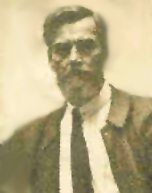
Josep Llimona i Bruguera (1864-1934)
Works
In Catalonia:
In Barcelona:
The prodigal son (1880)
Roman patrician (1880)
Ramon Berenguer el Gran (Ramon Berenguer Square 1880)
Recompense (Frieze on Triumph Arch 1888)
Relief’s on Columbus Monument (Five relief’s of the eight existing ones)
Columbus appearing to Kings
Columbus in the Council of Salamanca
The kings accepting his project
Disembarkation of Columbus in Barcelona (1888)
Florentine Page (1890)
Modesty (Museum of Modern Art 1891)
Virgin of Roser (1892)
The first communion (Museum of Modern Art 1897)
The man guiding the force (1899)
Desconsol (Distress – Ciutadella Park 1907)
The Idyll
Saint Josef (Tympanum of the Condal School, Amadeu Vives street 1907)
Monument to Dr. Robert (Tetuàn square 1903-1910)
Virgin (Chapel Jesus and Maria – Fabra i Puig Promenade 1910)
Verge de la Mercé (Virgin of Favor – Reproduction of a relief in the Church of Pompeia – Diagonal Avenue / Riera S. Miquel 1910)
Divine shepherd (Reproduction of a relief in the Church of Pompeia – Diagonal Avenue / Riera S. Miquel 1910)
The ascent of Maria (Reproduction of a relief in the Church of Pompeia – Diagonal Avenue / Riera S. Miquel 1910)
Saint Francis (High-relief on Pompeia Church Façade – Avda. Diagonal / Riera S. Miquel 1910)
Catalonia and sciences (1912)
The descent from the cross (Destroyed during civil war 1936/39 – 1912)
Figure of Woman (1912)
Figure of Woman (1913)
Statue of Casañas Cardinal
(Chapel of Saint Josef Oriol into the Cathedral 1913)
Virgin with boy and other figures
(Bas-relief 1913)
Youth or Water nymph (Museum of Modern Art 1913)
The Blacksmith (Catalunya Square, replica in the Trade Exhibition Area 1930)
Love to the childhood (Park of Montjuïc – Escola del Bosc 1914)
La Purísima Concepció (The Virgin – Church of the Sagrada Família – Holy Family – 1915) Holy Heart (Church of the Sagrada Família – Holy Family -1915)
Virgin (School of the Holy Heart in Sarrià 1915)
Base of the monument to Rafael de Casanova (Ronda Sant Pere 1916)
Saint George (Honor staircase of City hall 1916)
Insomnia (Private Collection 1917)
Picture of Carles G. Vidiella (Palau Hall of Music 1917)
Small statue (Museum of Modern Art 1917)
The burial of Christ (Cloister Chapel of Cathedral 1920)
Sant Jordi (1920)
The source (Private Collection 1921)
Sant Jordi (Saint George – Esplanada de l’oest Park of Montjuïc 1924)
Maternity (Private Collection 1924)
Kneel down Woman (1924)
Standing up Figure (1924)
Seated Figure (1924)
Shepherd (1924)
Adolescent (Private Collection 1924)
The beauty (Dante Square – Montjuïc 1924)
Youth (Private Collection 1924)
Nude of seated woman (1924)
Nude of seated woman (1925)
Holy Heart (1925)
Holy Heart (Relief 1925)
Monument to the Martyrs of
Independence (In collaboration with V. Navarro i Romero – Garriga i Bachs square)
Meditation (1925)
Head of boy (Private Collection 1927)
Portrait of Doctor Ferràn (Private Collection 1929)
Statue B (Pedralbes Palace 1929)
Woman (Park of Montjuïc – Stairs to National Palace 1929)
Woman (Park of Montjuïc – Cascades square 1929)
Saint George (City hall 1929)
The Bath (Modern Art Museum 1930)
Maternity (1930)
The son (Private 1930)
The flowers (Stairs of the Park of Montjuïc 1930)
Cordèlia (Private Collection 1930)
Lassitude (1930)
Saint Martin (1930)
The Student
In Montserrat:
Consumatum est (1896)
Figure of woman (Monumental Rosary – Mystery of glory 1903)
Tomb Figure (monumental Rosary – Mystery of glory 1903)
Christ raised again (in collaboration with Gaudí – monumental Rosary 1914)
In Sabadell:
The Virtue (Caixa d’estalvis de Sabadell Savings Bank 1910)
In Sant Julià de Vilatorta:
Jesus and the children (Relief in the tympanum of the Chapel of the School of orphans 1904)
In Tarragona:
The kiss of Judas (Cathedral 1929)
In Terrassa:
Portrait of an industrialist (Museum Vallparadís 1892)
Monument to Bartomeu Amat (Gardens of Industrial School 1909)
In Vic:
Seated woman (Monument to the founder of the Monastery of Carmelites 1914)
In Vilafranca del Penedès:
Saint Sepulchre (Saint Mary Basilica Crypt 1916)
Funerary sculpture:
Tombs in Barcelona
Angel (Torres tomb – Southwest Cemetery 1900)
Angel (Alomar-Estrany tomb – Southwest Cemetery 1900)
Resignation (Rialp tomb 1901)
Desconsol (Distress – A dressed variant – M. Casas de Vilanova tomb – Southwest Cemetery 1903)
Grief and resignation (Southwest Cemetery 1903)
Angel (Campesol i Rosell tomb – Southwest Cemetery)
Woman (Horta Cemetery 1904)
Angel (Llopart tomb – Southwest Cemetery 1905)
Sant Jordi (M. Granell tomb Southwest Cemetery 1928)
Tombs in Arenys de Mar (Maresme)
Mundet tomb (1901)
Massaguer tomb
Tomb in Masnou (Maresme)
The faith comforting the grief (Pere Grau tomb 1901)
Tomb in Roses (Alt Empordà)
A Pray (1903)
Tombs in Sitges
Dr. Robert tomb (1903)
Woman (Cros i Juliana tomb 1912)
Out of Catalonia:
Saint Nicholas and the fisherman (Tympanum of S. Nicholas Church – Bilbao 1897)
Tomb in Portugalete (Vizcaya)
Crucified Christ (Manuel Calvo Pantheon 1911)
Chopitea Tomb (Buenos Aires Cemetery 1927)
The fountain (Public gardens in Buenos Aires 1929)
The Angel (Comillas Cemetery Cantabria – Spain -)
Contents
Life
Llimona was the greatest of all the Catalonian Art Nouveau (Modernista) sculptors.Born in Barcelona in the year 1864. He trained at the Llotja of Barcelona, in the atelier of the brothers Venanci and
Agapit Vallmitjana, and also under the master Rosend Nobas. In 1880 he won the “Fortuny Pension” (an award granted by the Barcelona City Council in memory of the great Catalonian painter Marià Fortuny, to help artists to improve their capabilities), which enabled him to study in Rome. During his stay in Italy, he received the influence of the Florentine Renaissance sculpture and produced two obligatory works: the “Roman Patrician” and the equestrian “Ramon Berenguer
el Gran“. His style is characterized by a naturalistic idealism imbued with the picturesque. Infiesta divides the work of Llimona into five periods:
Period |
Denomination |
Characteristics |
|
1864 – 1895 |
Learning |
Works in Academic style |
|
1895 – 1909 |
Art Nouveau |
Female figures, tombs, dressed maidens |
|
1909 – 1913 |
Transition |
Religious statues, virgins, Christ’s |
|
1913 – 1925 |
Full maturity |
Heroes (Saint George, The Blacksmith), nude maidens |
|
1925 – 1934 |
Serenity |
Classic female nudes |
His earliest works were Academic in style, and were typically historical and allegorical in their choice of subject, including famous national figures such as the already mentioned “Ramon Berenguer el Gran” (a Count of Barcelona – 1890), the multi-figure frieze on Barcelona’s Arc de Triomf (Triumphal Arch) representing “Recompense” (1887), and the marble figure of “Modesty” (1891). He founded jointly with his brother, the painter Joan Llimona, the “Centre Artístic de Sant Lluc” (Artistic Center of Saint Luke), a Catalonian artistic religious association (both brothers were deeply religious) – at present a prestigious institution in artistic circles in Barcelona.
Later, his style veered fully towards the Art Nouveau ( Modernista), his models and influences deriving from the work of Rodin and Meunier.”The first communion” (1897), the famous “Desconsol” (Distress – 1907), which won the Prize of Honor of the International Exposition of Fine Arts in Barcelona that same year, and now located at present in front of the Parliament of Catalonia, and “The Idyll”, belong to this period. From 1900 he began to sculpt his famous female nudes, each of which are celebrated for their great elegance, veiled eroticism and smooth melancholy, characteristics that he developed as one of the most noticeable elements of his work.
In 1914 he created his impressive “Christ Resurrected” for the monumental Rosary of Montserrat in collaboration with Gaudí.
Llimona combines tenderness and virile force in works such as “The student” – one of the master works of Catalonian sculpture, and in the “Monument
to Doctor Robert” in Tetuàn square, Barcelona, and also in the equestrian statue of Sant Jordi (Saint George) in the city’s Park of Montjuïc. Llimona’s genius was also declared in other genres of his art, such as in his designs for medals and funerary sculpture; his work in the latter category including figurative sculpture for tombs in the Southwest Cemetery of Barcelona and the cemeteries of Arenys de Mar, Sitges and others within Catalonia
and elsewhere in Spain. As well as his work in Barcelona and other towns in Catalonia, he exhibited his work in Madrid, Brussels, Paris and Buenos Aires and Rosario in Argentina. Llimona was the President of the “Junta de Museus de Barcelona” (Barcelona Museums Council) from 1918 to 1924, and again from 1931 until
his death in 1934. Llimona was decorated by the governments of France and Italy, and was the first person to receive the Gold Medal of the city of Barcelona in 1932, in recognition of his extraordinary work in the development of
museums activity. Josep Llimona i Bruguera, died in Barcelona in 1934.
Images

Monument Dr. Robert Back

Monument Dr. Robert Front
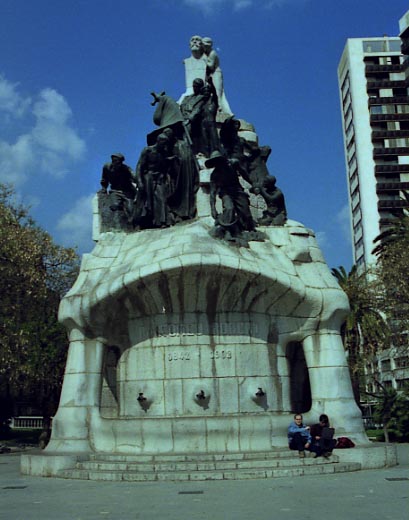
Monument Dr. Robert
Monument to Doctor Robert
(Mayor of Barcelona at the end of XIX Century)
This monument was erected by the city in University square, dismantled during Franco dictatorship and re-erected in Tetuàn square in 1988.
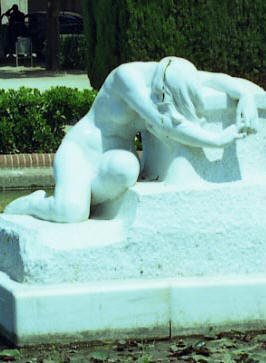
Desconsol
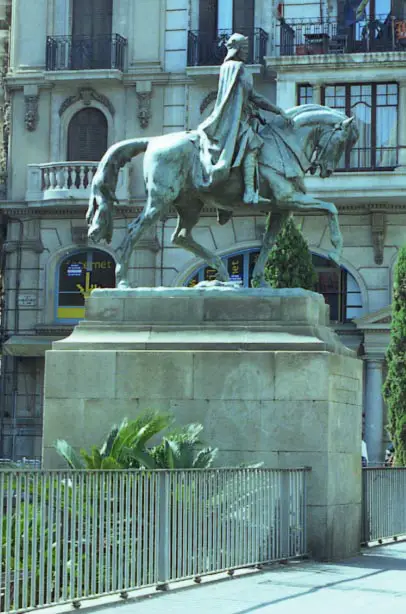
Ramon Berenguer el Gran
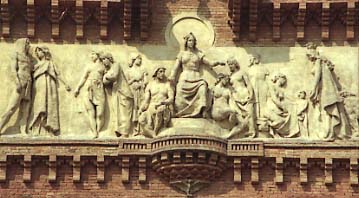
Recompense
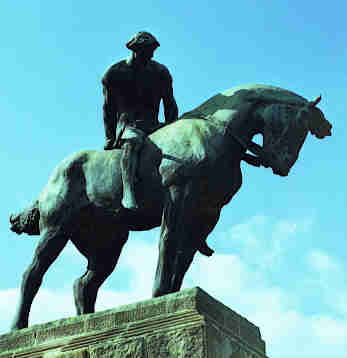
Saint George
Funerary Sculpture
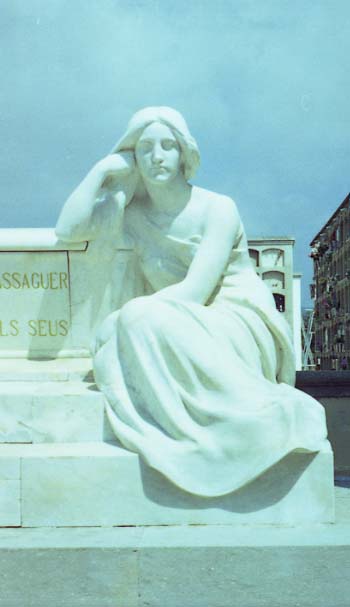
Massaguer Tomb
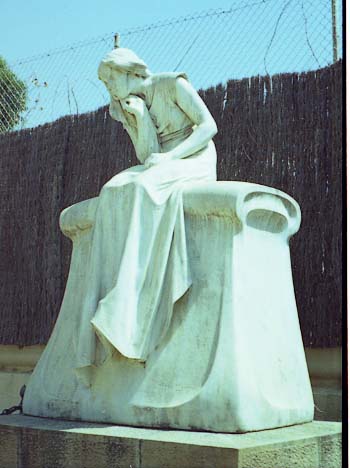
Mundet Tomb
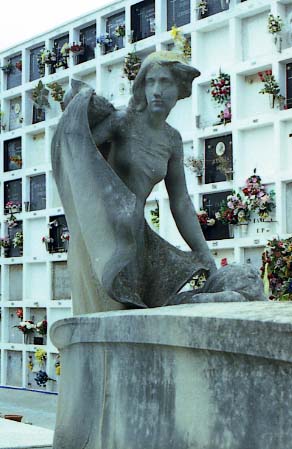
Robert Camps Tomb 2
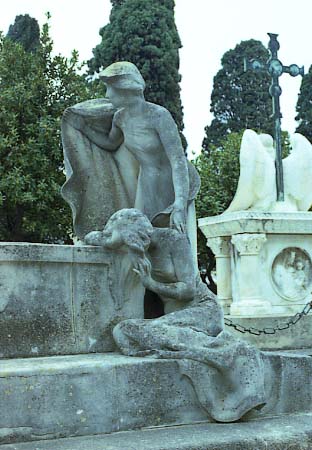
Robert Camps Tomb 1
Cemetery of Arenys de Mar
Cemetery of Sitges
Specific
|
|||
| Title | Author | Published by | Year |
|
Guía del Cementerio de Montjuïc |
Aguado, Neus |
Institut Municipal dels Serveis |
1993 |
| El arte modernista catalán | Cirici i Pellicer | 1951 | |
| L’escultura catalana; | Cirici i Pellicer | 1957; | |
| Gran Enciclopèdia Catalana | Different authors | Enciclopèdia Catalana | |
| Enciclopèdia Salvat Català; | Different authors | Edicions Salvat | |
| Artistas catalanes | G.Camio, Pedro | Editorial Zoila Ascasibar | 1929 |
| Josep Llimona y Joan Llimona, Vida y Obra | Infiesta Monterde, Josep M | Edicions de Nou Art Thor | 1977 |
| Un siglo de escultura catalana | Infiesta, José Manuel | 1975 | |
| Modernismo en Cataluña | Infiesta, José Manuel | 1976 | |
| José Llimona, escultor | Monedero Puig, Manuela | Editora Nacional Madrid | 1966 |
| Tres senyors: Josep Llimona | Plà, Josep | 1971 | |
| El arte modernista en Barcelona | Ràfols, J. F. | 1943 | |
| Modernismo y Modernistas | Ràfols, J. F. | 1949 | |
| Diccionario bibliográfico de artistas de Cataluña |
Ràfols, J. F. | 1953 | |
| Nuestros artistas | Serra, Francisco | 1954 | |
| L’escultura del segle XIX a Catalunya | Subirachs i Burgaya, Judit | Publicacions de l’Abadia de Montserrat |
1994 |
| Allgemeines Lexikon der Bildenden Künstler | Wolmer, Hans | 1953 | |
Other Catalan Art Nouveau Sculptors
Eusebi ARNAU i Mascort
Miquel BLAY i Fabregues
Joan Carreres
Enric Clarasó i Daudí
Lambert Escaler i Milà
Manel FUXÀ i Leal
Pau GARGALLO i Catalán
Alfons Juyol i Bach
Josep LLIMONA i Bruguera
Agustí Querol
Josep Reynés i Gurguí
Agapit VALLMITJANA i Barbany
VenancI VALLMITJANA i Barbany
