Stained Glass Windows
| GAUDÍ - The Man | Biographic Synthesis Extended Biography Chronology Influences Gaudí's Political and Patriotic Sentiment Gaudí's Friends Gaudí's Collaborators |
| The Work | Architectonic Work Characteristic Styles Technical Aspects Decorative Aspects - Ceramics | Furniture | Iron and Other Metals | Stained Glasses |
| Sources and Other Information | Links & Bibliography |
Stained glass and Glassworks in Gaudi’s Work
Stained glass of varying importance can be found in many of Gaudí’s buildings. Gaudí’s stained glass, constructed with the most advanced techniques of the day, often has a revolutionary aesthetic and surpass the era’s normal standards. They present an extraordinary liveliness of color while representing natural elements (like vegetables or animals) or, in the case of churches, images of saints or biblical scenes.
Palau Güell (1886-1889)
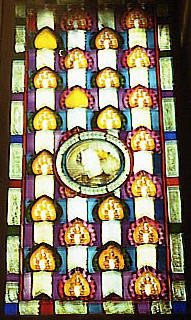
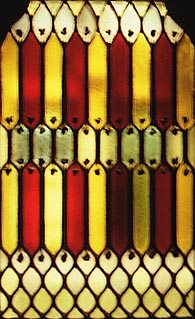
This building contains a notable quantity of stained glass designed for different uses.
Sagrada Família (1889)
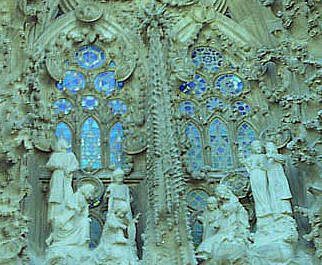
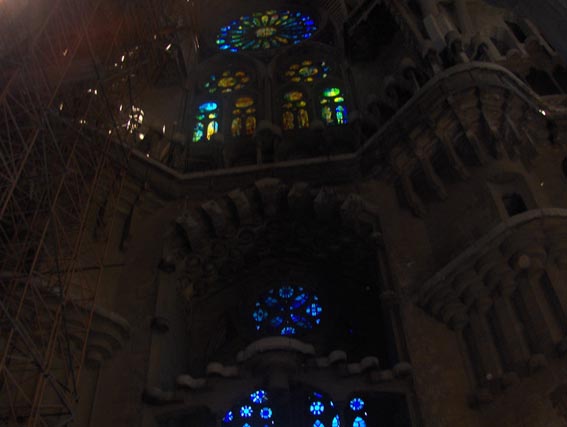
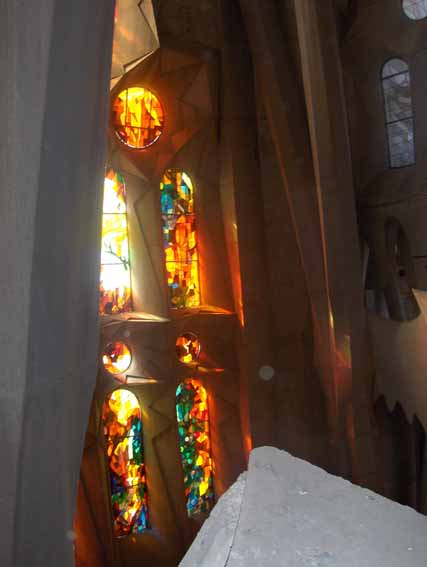
The following images are of the Nativity façade, seen from the exterior and interior. Contrast these with the last image, from the Passion façade (designed after Gaudí’s death).
Palma de Mallorca Cathedral
The following stained glass windows were designed by Gaudí:
– St. Peter’s boat: window depicting a boat carrying Jesus and St. Peter, sailing over the waves. The 334x107cm leaded glass and fired window was constructed by Eudald Amigó and Sons.
– Two stained glass windows (Regina Confessarum and Regina Virginium) and one rose window (Regina Angelorum) in the Trinity chapel made by using the technique of superimposing three panes of glass in primary colors in order to regulate the intensity of light.
One window in the Episcopal Palace there is also noteworthy: the window of the Apostle, of leaded glass and fire-glazed, by Rigalt, Granell, i Cia in 1903.
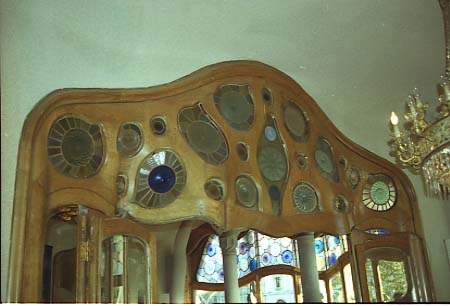
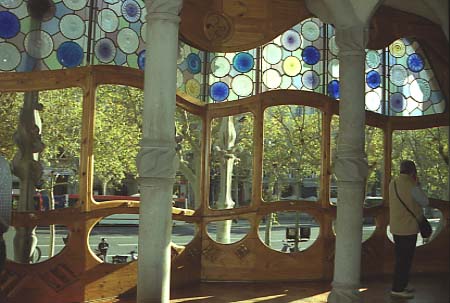
Glass at Casa Batlló (1904-1906)
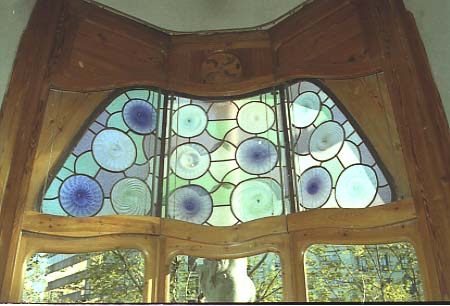
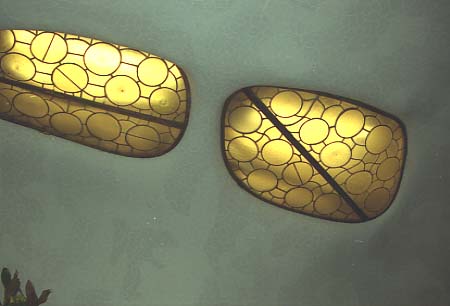
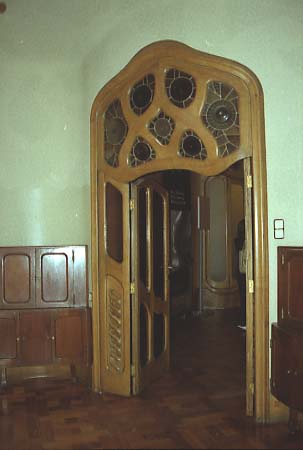
Exterior and interior stained glass can be found in various doors, doorframes, skylights, and door jambs on the main floor.
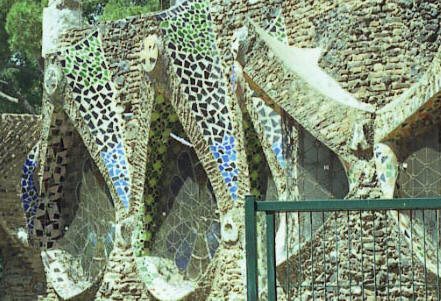
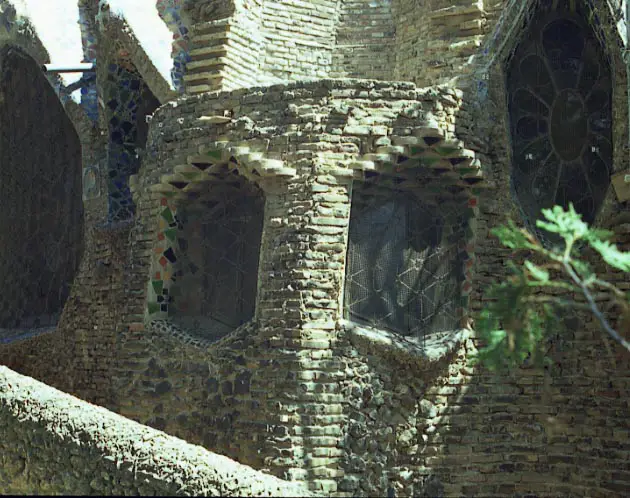
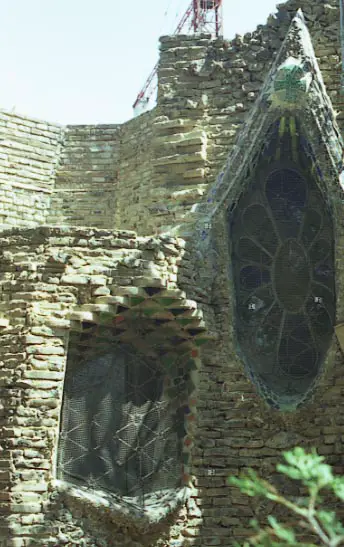
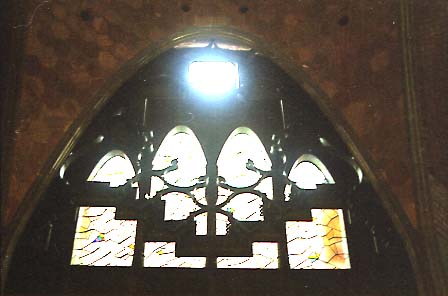
Stained glass windows at the Colònia Güell (1898-1916)
Some very original stained glass windows illuminate the interior of the crypt.