
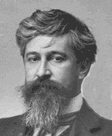
Santiago Rusinol i Prats (1861-1931)
Painting works
Paintings (list):
Interiors:
Cuina del Moulin de la Galette
Interior amb figures
Interior del Palau de Víznar
Interior i pati
Pati de Sitges (interior)
Landscapes:
Ametllers en flor
Arribada de carros
Calvari mallorquí
Calvari valencià
Carrer de Montmartre (2)
Carrer de Sitges
Cementiri de Montmartre
Cementiri dels frares
Claustre de Georges Sand
Coves de Guadix
Dijous Sant (Pollença)
El desmai
El Generalife (3)
El Pati blau
El Port de Barcelona
Entrada al Vinyet
Entrada d’un parc
Finca d’Arbúcies
Galeria blanca
Girona
Glorieta
Glorieta (Aranjuez)
Glorieta verda
Gorg
Hort del Vinyet
Ille de Saint Louis
Jardí (2)
Jardí amb xiprers
Jardí amb monument
Jardí amb brollador (3)
Jardí de Can Fontàn
Jardí d’hivern
Jardí d’Ulldemolins
Jardí de Xàtiva
Jardí del Generalife
Jardí del Palau de Víznar
Jardí del Pirata (Mallorca)
Jardins
Jardins d’Aranjuez (3)
Jardins Monfort (València)
La Banlieue
La platja
La tanca
La vall dels tarongers
L’eixida
Le Moulin de la Galette
Montmartre
Montserrat
Nôtre Dame et la Seine
Paisatge
Passeig de pins (Aranjuez)
Passeig místic
Pati (2)
Pati blau
Pati blau (Sitges)
Pati amb figures
Pinar (Aranjuez)
Primaveral
Pont sobre un clot
Reflexes
Reflexes en el llac
Rouen
Sitges del passat
Terrassa de Can Dalmau
The green Wall
Torrent de Pareis
Un carro de bohemis
Un pendent a Montmartre
Valldemosa
Vista de Montserrat
Social themes:
Abans de prendre
l’alcaloide
Cafè de Montmartre
Dona cosint
Jugant al pati
L’oració
La convalescent
La morfina
L’ultima recepta
Mirant un retrat
Nena convalescent
Pelant la pava
Repassant les xarxes
Portraits:
Albert Llanas
Arcadi Mas i Fontdevila
Canudes malalt
Carles Mani
Clarasó llegint
El novici
El pintor Ricard Planells
El pintor Terrassa
El Senyor Bofill de Sitges
En Cuca
Enric Morera
Erik Satie
Gaietà Benaprès
Gitana d’Albaicín
Home assegut
Josep Ixart
L’actor Riquelme
La nena del clavell
La noia de la fira
La Parisienne
La senyoreta Nantas
Les vicentetes
Lluís Magrans
Maria Rusiñol al Cau Ferrat
Miquel Utrillo (2)
Miss Mc Flower
Modest Sánchez Ortiz
Panxo Xicarrons
Pere Deas Caravent
Pintor al Vinyet
Ramon Casas (2)
Ramon Casas a Paris
Retrat de dona
Retrat de nen
Retrat de nena
Ricard Roig
Risueña
Rusiñol i Casas
retratant-se
Senyora Riquelme
Un bohemi
Miscellaneous:
Al·legoria de la poesia
Gloria de Catalunya
Designs:
Calvari de Fiésole
Dibuixos fets a Andalusia
Dibuixos fets a París
Dibuixos fets a Sitges
Erik Satie tocant
l’harmònium
Fulls de la vida
L’alegria que passa
Paisatge de Fiésole
Personatge sitgetà
Retrats dels acusats de
l’atemptat del Liceu
Retrats dels músics de la
Cobla del Pensil
Contents
Life
Born in Barcelona in the year 1861.
After leaving school he worked in his family’s textile businesses, but he quickly broke with this family tradition and left to embark upon a career as an artist. Largely self-taught, he developed his own technical capacity in the Centre d’aquarelistes de Barcelona (Watercolour Center of Barcelona), and was also a follower of Tomas Moragas.
After a visit to Paris in 1889, where he lived in Montmartre with Ramon Casas and Ignacio Zuloaga, his paintings adopted grey tonalities following the manner of Whistler, and became influenced by the Impressionists. His paintings of that period are basically landscapes, urban themes, portraits and also Art Nouveau symbolic compositions.
From 1896, after travelling to Andalusia, he started to paint gardens.
When he returned to Barcelona, he became one of the most active developers of the Art Nouveau movement known as “Art Nouveau,” joining artists and avant-garde writers who met in a bar whose name they adopted as their own. He also was linked with “L’avenç,” a magazine treating Art Nouveau themes.
The life of Santiago Rusiñol is strongly linked with the town of Sitges, which he first visited in 1881. Immediately taken with the town, he decided to settle there and bought a house to exhibit his enormous collections of forged iron, glass pieces, pictures and other objects that today are part of the “Cau Ferrat Museum”. He also organized the town’s famous Modernist festivals.
Rusiñol’s enthusiasm for Sitges was based on the exceptional natural conditions and beauty of the area, and also because of the existence of an interesting school of painters there named “Escola Luminista,” whose members included Joan Batlle i Amell, Felip Massó, Arcadi Mas i Fondevila, Joan Roig i Soler, Joaquim de Miró, and others. (For information about the school, see the specific bibliography at the end of the page).
In addition to his activities as a painter, he also was a writer of some repute.
Rusiñol started to write at the age of twenty. His first writings were nature descriptions and letters, especially those to his future wife Lluïsa Denís. These texts were very important for him to test his grasp of language, and we find in them an element of caricature. Some of these writings, although not intended for publication, nevertheless appeared in the journal “La Vanguardia” and reveal his talent for criticism and irony.
Later, during his stay in Paris, he sent the same journal his “Cartas desde el Molino” (Letters from the Mill) (1890-1892), in which he depicts bohemian life in the Moulin de la Galette”. These letters, together with his literary critiques, were collected in “Impresiones de Arte” (1897), including “Desde una Isla” (From an Island) (1893), “Desde otra Isla” (From another Island) (1894), and “Desde Andalucia” (From Andalusia) (1895).
His highest literary level was developed from the period in which he translated some works by Baudelaire, which influenced his first books: “Anant Pel Món” (1896), “Oracions” (1897), “Fulls de la Vida” (1898), “El Jardí Abandonat” (1900), and “Cigales i Formigues” (1901), which linked with French symbolism.
Rusiñol was also tempted by the theatre. He wrote various plays with enormous success, like “Els Jocs Florals de Canprosa”, “El Pati Blau” (1903), and also a large series of dramas, comedies and vaudevilles, culminating in 1917 with the theater version of “L’Auca del Senyor Esteve”.
In order to defend Modernisme (Catalan Art Nouveau) against its adversaries of the ‘Noucentisme’ – the movement following Modernisme in Catalonia – he used the alias ‘Xarau’ in his writings in the magazine “l’Esquella de la Torratxa”.
Rusiñol died in Aranjuez, Spain, in 1931.
Literary Works
Anant pel món – 1896
Oracions – 1897
Fulls de la vida – 1898
L’Alegria que passa – 1898 –
El jardí abandonat – 1900
Cigales i formigues – 1901
Llibertat! – 1901
El malalt crònic – 1902
Els Jocs Florals de Canprosa – 1902
L’hèroe – 1903
El pati blau – 1903
El místic – 1903
Els punxasàrries – 1904
El bombero – 1904
L’escudellòmetro -1905
La nit de l’amor – 1905
La lletja – 1905
El bon policia – 1905
L’auca del senyor Esteve – 1907 Novel.la
(versió teatral – 1917)
El català de “La Mancha” 1914
La “Niña Gorda” – 1917
En Josepet de Sant Celoni 1918
Other Catalan Art Nouveau Painters
-Hermen ANGLADA i Camarassa -Joan BRULL i Vinyoles -Ricard Canals -Agapit Casas i Abarca -Ramón CASAS i Carbó -Josep CUSACHS -Manuel Cusí
-Xavier Gosé i Rovira -Sebastiá Junyent -Joan Llimona i Bruguera -Josep Maria Marqués -Francesc MASRIERA i Manovens -Josep MASRIERA I Manovens -Lluis MASRIERA i Rosés -Eliseu MEIFRÈN i Roig -Joaquim MIR i Trinxet -Francesc Miralles -Isidre NONELL i Monturiol -Marià PIDELASERRA i Brias -Josep Pinós i Comes -Josep Reynés -Alexandre Riquer i Ynglada -Pau Roig i Sisa -Santiago RUSIÑOL i Prats -Antoni Serra i Fiter -Josep Maria Tamburini -Modest Urgell -Miquel UTRILLO i Morlius -Lluïsa VIDAL i Puig -Pere Ysern i Alié
Other Catalan Art Nouveau Writers
Caterina Albert i Paradís Prudenci Bertrana i Compte Jaume Brossa i Roger Raimon Casellas i Dou Ignasi Iglesias i Pujades Pompeu Gener Adrià Gual i Queralt Hortensi Güell Antoni Isern Albert Llanas Joan MARAGALL i Gorina Alfons Maseras i Galtés Jaume Massó i Torrents Apel·les Mestres i Oñós Rafael Nogueras i Ollé Miquel de Palol Josep Pin i Soler Josep Pons i Pagès Pere Prat i Gaballí Joan Puig i Ferrater Alexandre RIQUER i Ynglada Santiago RUSIÑOL i Prats Joaquim Ruyra i Oms Maria Antònia Salvà Víctor Català (see Caterina Albert) Plàcid Vidal i Rosich Jeroni Zanné i Rodríguez
