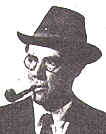
Prudenci Bertrana i Compte (1867-1941)
Works:
Conferences:
De les belleses de la
natura i el meu goig
-On the nature beauties and my
joy (1908)
Chronicles on newspapers
Impromptus
Fiction / Tales
L’oreneta -The swallow
La guineu -The Vixen
Tard! -Late! (1903)
Crisàlides -Chrysalides (1907)
Proses bàrbares -Barbar
proses (1911)
La lloca de la vidua -The
Widow Broody Hen (1915)
Els Herois -The Heros (1920)
La bassa roja -The Red Pond (1923)
El meu amic Pellini i altres
contes -My friend Pellini and
Other Tales (1923)
El desig de pecar -The desire
to sin (1924)
L’illa perduda -The loosed
island (1920)
L’orgue del diputat -The
deputy organ (1924)
L’Ós benèmerit i altres
bèsties -The Worthy Bear and
Other Beasts (1932)
La Ruta abandonada -The
Abandoned Route (1934)
En Rossinyol que jo he
tractat -The Rossinyol I have
Treated (1937)
Novel
Violeta (1899 – Inedited)
Josafat (1906)
Nàufrags Wrecked (1906)
Tieta Claudina -Aunt Claudina
(1910)
L’oca de la molinera -The
Miller Goose (1917)
La Margarideta (1918)
Jo! Memòries d’un metge
filòsof Me! -Memories of a
Philosopher Doctor (1925)
Entre la terra i els núvols:
-Between Land and Clouds:
L’Hereu -The Heir (1931)
El vagabund -The Vagabond
(1933)
L’mpenitent -The Impenitent
(1938)
Theatre
Josep II rei Joseph II king (1918)
Enyorada solitud! Mourn
solitude! (1918)
Els atropellats The walk over
people (1918)
Les ales d’Ernestina -The
Wings of Ernestina (1921)
La dona neta -The Clean Woman
(1924)
El comiat de Teresa -The
Goodbye of Therese ( 1931)
El fantasma de Montcorb -The
Ghost of Montcorb (1933)
Els aprensius -The Worried
People (1934)
Life:
He is born in Tordera (Maresme) in the year 1867 in a family of conservative rural proprietors. He studies the baccalaureate in Gerona and initiates the studies of industrial engineer. Nevertheless, he leaves quickly that technical way to get up artistic studies in the Llotja school of arts in Barcelona in 1885.
Bertrana came back to Gerona in 1890 where he married Neus Salazar and due to the loss of the familiar inheritance as a result of lawsuits, he organized a painting academy
From 1902, he leaves the painting and enters in the redaction of the conservative “Vida” (Life) magazine. This was a magazine treating significant aspects of Modernisme (Art Nouveau) and in which Bertrana publishes commentaries on art and Literature and some stories like “La Guineu” (The Vixen) a rural atmosphere story.
Bertrana worked in the organization of the “Jocs Florals” ( Floral Games) and in the development of his literary abilities with works like “Tard” (Late) in 1903, “Josafat” in 1906, “Crisàlides” (Chrysalides), and also in 1906 “Nàufrags” (Wrecked) a novel with an exceptional success.
In that period he occupies the position of director of the republican newspaper “Ciudadania” (Citizenship) until his dismissal and imprisonment duly a chronicle he published.
As a result of these facts, he travel again to Barcelona in 1911 where he was already be object of a recognition to his work specially by his conference held in 1908 in the “Associació Nacionalista Catalana” (Nationalist Catalan Asociation) “De les belleses de la natura i el meu goig” (On the nature beauties and my joy) in which Bertrana proposes an anti-intellectual attitude in front of life, position that he confirmed again in 1936 in one intervention as a President of the Floral Games of Barcelona.
In Barcelona he managed in very precarious conditions the satiric weekly magazines “L’Esquella de la Torratxa” and “La Campana de Gracia”, collaborating also in other magazines like “El Poble Català” and “Iberia”.
In that period dominated by the Noucentisme (the artistic tendency following the Modernisme – Art Nouveau – in Catalonia), Bertrana like so many other modernist artists, suffered a frustrating marginalization.
Prudenci Bertrana deals with diverse literary genres – humor, psychological novel, the animal world, journalist chronicles – frequently with much more success between people than critics. In spite of it, it does not leave the painting classes that continue distributing in the Escola del Bosc of the City council of Barcelona in Montjuïc.
His chronicles were published in newspapers as “La Publicitat” and “La Veu de Catalunya” where he was a theater critic and where he published his “Impromptus” and also in the weekly “Magazine of Catalunya”.
His Literature is based on the detailed reality observation, together with the experience he obtains from his work and his human experience.
In the trilogy “Entre la terra i els núvols” (Between land and clouds) that is made up of “L’hereu” (The heir) (1931)”El Vagabund” (The vagabond) (1933) and “L’impenitent” (The impenitent) (1939) he gathers his autobiographic experience in where he explain the dramatic experiences he lived, like the death of three of his children.
In 1935 he presides the Floral Games of Gerona and in 1936 (as we mentioned above) those of Barcelona. In 1937, already during the Spanish civil war, he publishes “En Rossinyol que jo he tractat” (The Rossinyol I have treated).
His work reflects as a whole a vigorous, vital and persistent individualism.
Bertrana is the father of the famous Catalan writer Aurora Bertrana.
Prudenci Bertrana died in Barcelona in the year 1941. Its recognition like writer has been growing, specially from the publication of his complete works in 1968 and the creation of a literary novel prize with his name.
Specific Bibliography |
|||
| Title | Author | Published by | Year |
| Gran enciclopèdia catalana | Different authors | Enciclopèdia Catalana | |
| La prosa modernista: un concepte polièdric | Julià, Lluïsa | Lletra – UOC – Espai virtual de literatura catalana | |
| Aspectes del Modernisme | Marfany, Joan Lluís | Curial | 1975 |
| Historia de la Literatura catalana, El Modernisme, vol 8. | Molas, Joaquim / de Riquer, Martí | Editorial Ariel | 1985 |
| Dotze mestres | Serrahima, Maurici | Destino | 1972 |
| El primer modernismo literario catalán y sus fundamentos ideológicos | Valentí, Eduard | Editorial Ariel | 1972 |
Other Catalan Art Nouveau Writers:
Caterina Albert i Paradís Prudenci Bertrana Jaume Brossa i Roger Raimon Casellas i Dou Ignasi Iglesias i Pujades Pompeu Gener Adrià Gual i Queralt Hortensi Güell Antoni Isern Albert Llanas Joan Maragall i Gorina Alfons Maseras i Galtés Jaume Massó i Torrents Apel·les Mestres i Oñós
Rafael Nogueras i Ollé Miquel de Palol Josep Pin i Soler Josep Pons i Pagès Pere Prat i Gaballí Joan Puig i Ferrater Alexandre Riquer i Ynglada Santiago Rusiñol i Prats Joaquim Ruyra i Oms Maria Antònia Salvà Víctor Català (see Caterina Albert)
Plàcid Vidal i Rosich Jeroni Zanné i Rodríguez
