
Pujol i Bausis Factory (1858 – c. 1960)
History
The beginnings:
The earliest documentation of the company places its founding on July 12, 1858, when Joan Terrada and Màrius Gourde became partners in a “brick factory.” On July 28, Bartomeu Asmarats granted a lease on 2450 m² of land, the site that the factory occupies today.
The original company did not benefit from the required harmony between members and was dissolved on February 4, 1861 and closed on February 26, 1862. On February 28, 1863 Joan Terrada and Jaume Gelbert signed an incorporation agreement to continue producing tiles at the factory, but on August 23 of the same year this company also was dissolved.
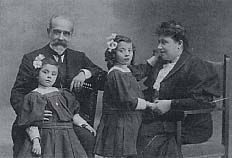
The factory remained inactive until an unknown date between 1870 and 1875, when the Pujol family began to manage it. Jaume Pujol took over the direction of the factory in 1874 and two years later became its sole owner. He continued managing it, with the help of his son Pau, until his death 1892.
The Art Nouveau period:
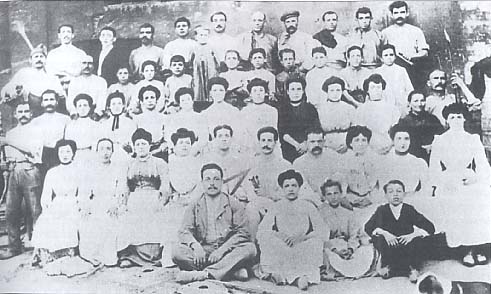
Jaume Pujol’s son, Pau Pujol i Vila, succeeded him and managed the facThe staff of the Pujol i Bausis factory around 1904. Picture from Remei Artigas. AMELtory during the high point of Art Nouveau. At that time the factory was called “Hijo de Jaume Pujol i Bausis” (Son of Jaume Pujol i Bausis), although it was popularly known as “The Rajoleta” (The Little Tile).
The factory experienced strong growth, obliging it to increase its manufacturing capacity with new kilns permitting faster and more varied production of tiles.
In 1901, Joan Baptista Alós began to serve as the factory’s artistic director, a post he held until 1904. During this short period he carried out important work in the field of design requiring another expansion of the factory.
The institutions that have recovered primary sources of the period keep important documentation, including drawings by Domènech i Montaner, Antoni Gallissà and Puig i Cadafalch that became the basis for the design of many of the factory’s productions. In the catalogue we still can see many of these drawings, but a better record is in the many buildings in Catalonia preserving these tiles: the Institut Pere Mata of Reus, the houses Lleó Morera, Amatller, Martí (Els Quatre Gats), Macaya, etc. in Barcelona, the house of Puig i Cadafalch in Argentona and many others.
In the documentation of this period, constant references appear to deliveries of large quantities of decorative elements expressly mentioned as “modernist” (Catalan Art Nouveau).
There are also documents concerning payments to Lluís Brú for works he carried out for the firm.
Domènech i Montaner and the Castell dels tres dragons:
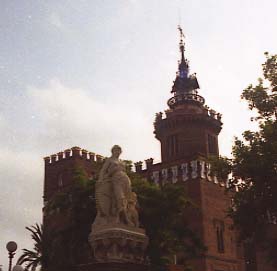
In 1903, Domènech i Montaner published an article in La Veu de Catalunya in which, while praising the work done at the “Castell dels tres dragons” in Barcelona’s Ciutadella Park for the revival of various arts and methods (such as bronze foundries and forged iron, ceramics and gilding in the Valencian style, embossed metals, wall tiles, woodwork and decorative sculpture) that had previously been done rudimentarily or very poorly (“qu’es feyan allavores rudimentaris o molt malament” in contemporary Catalan), he mentioned the effort of many craftsmen and artists, including Jaume Pujol, among other recognized specialists such as Santigós and Ros.
Clients: architects and private customers:
During this period an impressive list of architects and private individuals bought materials from the factory. Among the architects were Gaudí, Domènech i Montaner, Puig i Cadafalch, Salvador Valeri, Francesc Sellés, Bonaventura Bassegoda, Josep Font i Gumà, Enric Sagnier, Josep Azemar, Manel Joaquim Raspall and Josep Moncunill.
The families Güell, Aymerich, Quadras, Golferichs and others also purchased tiles from the factory.
After Modernism:
The factory’s activity continued to be important even once modernism had faded, and the factory continued at a high production rate. In 1914, Francesc Quer i Selvas was brought on as artistic director, and like Alós before him, carried out important work.
Production continued to developed, but of goods far removed from the rich decorative qualities that had characterized the Art Nouveau era. Finally, the factory went out of business in the 1960s.
Today:
Fortunately, after the business closed, many elements that formed part of the factory were saved. A wealth of documentation, that as mentioned above has aided interesting studies of the factory’s activities and about ceramics in general, has facilitated the creation of a considerable body of study and conservation in Esplugues that is or will be part of institutions like the future Pujol i Bausis Museum, the Museum of Can Tinturé and the Municipal Archives, to which various specialists are attached. Can Tintoré Museum in Esplugues de Llobregat
The future Pujol i Bausis “La rajoleta” Museum will be a Centre of ceramics and industrial archaeology. It will comprise the old grounds of the factory, where various kilns have been preserved, industrial equipment of the era and other elements related to the activity of the factory, where temporary exhibits are already being held. Its museum heritage draws on the series of structures and the most significant elements of what was once a great centre of production, such as the clay separators, mill complex, clay corner, steam engine and collection of four types of kilns: Arab, underground, bottle and glazing.
The Museum of Can Tinturé presents the collection of mass-produced tiles of Salvador Miquel – more than 3000 tiles of different styles and models from the 14th to the 19th century – and is the first museum anywhere devoted solely to this theme. It periodically hosts temporary exhibitions, such as the current one focusing on Lluís Brú.
Images
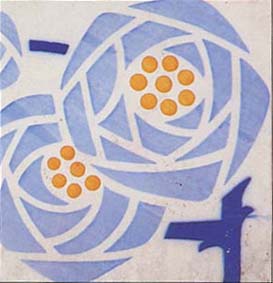
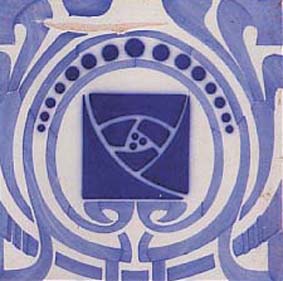
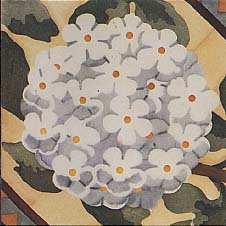
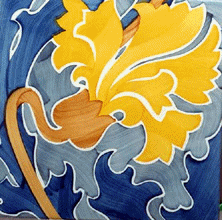
The Pujol i Bausis catalogue*
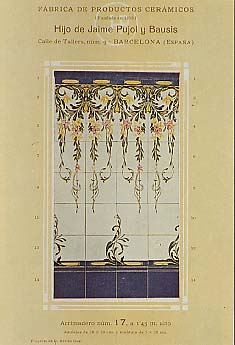
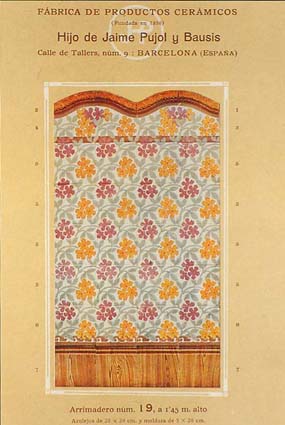
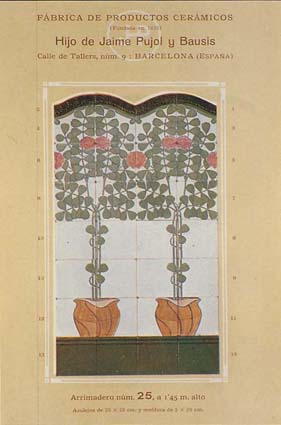
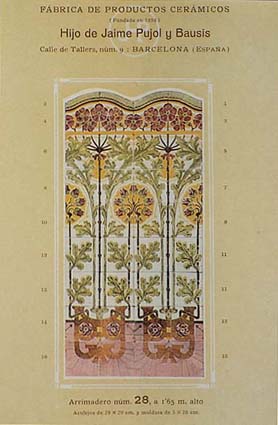
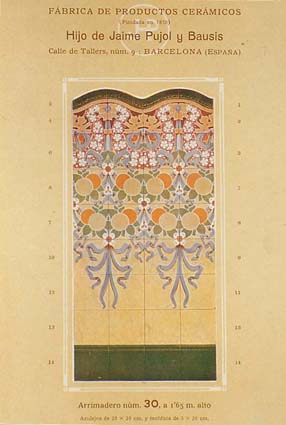
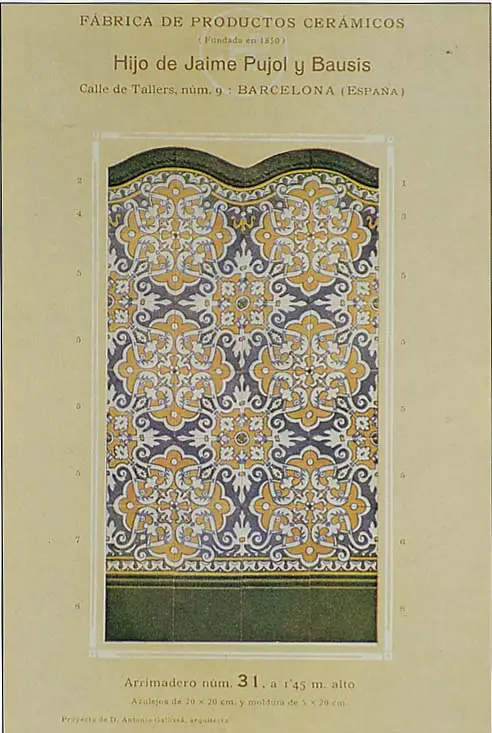
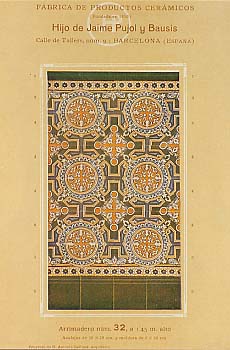
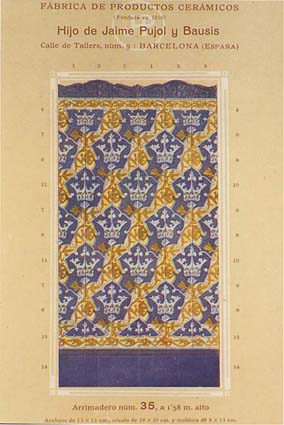
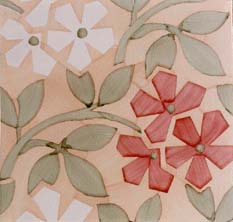
Other models of Pujol i Bausis*:

We are grateful for the collaboration of the following institutions and individuals:
Museu Tinturé of Esplugues de Llobregat and particularly Marta Saliné.
Municipal Archive of Esplugues de Llobregat and particularly Roser Vilardell.
(Both institutions depending of the Esplugues de Llobregat Town Council).
Specific bibliography |
|||
Title |
Author | Published by |
Year |
| Reseña y Catálogo de arquitectura modernista (2 vols.) | Bohigas, Oriol | Editorial Lumen | 1983 |
| El arte modernista catalán | Cirici, Alexandre | Aymá, Editor | 1951 |
| Arquitectura Modernista en Catalunya | Lacuesta, Raquel / González, Antoni | Ed. Gustavo Gili, S.A. | 1990 |
|
Dels bells oficis al disseny actual. FAD 80 anys |
Mainar, Josep / Corredor-Mateos, Josep |
Editorial Blume | 1984 |
| Arquitectura Modernista a Reus | Pragma Edicions | 2003 | |
| La Casa Navàs de Reus | Pragma Edicions | 2005 | |
| L’Institut Pere Mata de Reus | Pragma Edicions | 2004 | |
| El Mosaico | Rossi, Ferdinando | Editorial Daimon | 1971 |
|
Lluís Brú fragments d’un creador de mosaics modernistes |
Saliné, Marta (comissària) and other authors |
Ajuntament d’Esplugues de Llobregat |
2005 |
| Pujol i Bausis | Subias Pujadas, M. Pia |
Ajuntament d’Esplugues de Llobregat |
1989 |
|
Summa Artis – Volum XLII – La cerámica un arte industrial en la época del Modernismo |
Subias Pujadas, M. Pia | Editorial Espasa Calpe, S.A. | 1998 |
| Modernisme i Modernistes | Varis autors | Lunwerg editores | 2001 |
| Esplugues i el Modernisme – Patrimoni i ciutat | Vidal i Jansà, Mercè / Amigó,J. / Lacuesta, R. / Moragas, A. / Subias, M.P. | Ajuntament d’Esplugues de Llobregat Grup de Treball | 2000 |
