
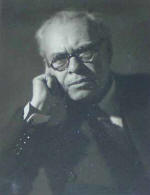
Joan Lamote de Grignon i Bocquet (1872-1949)
Works:
Music for orchestra:
-Scherzo on a popular theme (La filadora) (The spinner 1897)
-Médona, symphonic poem (1899)
-Révérie, schumaniana for violoncello and orchestra (1901)
-Solidaridad de las flores, sardana (Solidarity of the flowers, sardane 1907)
-Hispàniques II: Catalunya, suite (1913)
-Cantos populares españoles (Popular spanish songs 1914)
-Hispániques I: Andalusia, suite (1924)
-Theme and variations for double bass and orchestra (ca.1946)
Music for orchestra and voice:
-La Nit de Nadal, oratori (Christmas oratory 1902)
-Poema romàntich (Càntich d’Amor i de Dolor), (Romantic poem (Canticle of Love and Dolour) for baritone and orchestra
Lieder and songs:
-Dos canciones de Contraluz (Two songs against the light 1898)
-Funeral (1898)
-L’àngel de la son (The angel of dream 1898)
-Melodias (1898-1907) (Melodies not finished or with only the score indications)
-Sis cançons de Violetes (Six violets songs 1901-1904)
-Íntima (1904-1907)
-Tres poemas para soprano y orquesta (Three poems for soprano and orchestra 1904-na.1924)
-Quan jo ja seré mort (When I will die 1905)
-Prec de Madonna Elisenda (Request of Madonna Elisenda 1906-1907)
-Oració de mercès (Thanks prayer 1914)
-Ros ton cabell, blau ton vestit (Your blond hair, your blue dress)
-Uns llavis molls de la fresca rosada (Mouths moist by the fresh dew)
Scenic music:
Opera
-Imogina, dramatic scene (1894)
-L’Angelo, Scene for bariton and orchestra (1899)
-Hesperia (1906)
Zarzuela
-En todas partes cuecen habas o La romería del santo (The pilgrimage of the Saint 1895)
-Pares y nones (Pairs and odd numbers 1895)
-Soledad: Act 1 (Solitude 1895)
-Las siete palabras (The seven words 1896)
-Los antropófagos (The cannivals1896)
-La Perla del Avapiés,{sic} (The pearl of Avapiés)
-Un millón (A milion) Unfinished
Voice and piano:
-Cançons catalanes (Catalan songs 1896-1897)
-Violetes (Violets 1901-1904)
-Passioneres (1901-1906)
-Compilation of works for voice and piano (1904-1907) some of it unfinished, frequently about transcriptions of lieder for voice and orchestra.
Transcriptions for Band:
-Of various works by composers as Albéniz to Weber and also by Lamote himself.
Biography:
Childhood and Early Studies:
Joan Lamote de Grignon i Bocquet was born in Barcelona on July 7, 1872 to parents of French descent, Lluís Lamote de Grignon i Lebiay and Elena Bocquet. While he was still young, the family relocated to Tortosa, where they owned land. Therefore Lamote obtained his high school diploma from the Tarragona Institute in 1887. During that time, he received his first musical instruction under Josep Abarcat, but, feeling a strong inclination to continue his musical studies further, he moved to Barcelona and enrolled at the Liceu Conservatory, the only one available at that time.
There he met Antoni Nicolau, who became his composition teacher, as well as T. Güell, Gabriel Balart (violin), and B. Tintoré (piano). He acquitted himself with distinction at the piano and in time was named professor of piano in 1890; later, he held the posts of professor of music theory and assistant professor of harmony and was also responsible for the musical group at the Liceu Conservatory.
Youth dynamism and marriage:
In the midst of the above events, Lamote married Florentina Ribas i Mallol on July 31, 1893. Together they had a single child, Ricard, born September 23, 1899, who was destined for intimate collaboration with his father and for the continuation of his work, particularly as orchestra director. It is known that his name was chosen due to Lamote’s admiration for Richard Wagner. During the 1890s, when his piano concert schedule permitted, Lamote dedicated himself to composition. This is the period that gave rise to Gavotte en D major, Six Catalan Songs, Imogina, and L’Angelo, some of which premiered at the Teatre Líric. Although Lamote’s musical activity covered a very long period, his ideological and musical formation was consolidated during the profoundly influential Modernist era.
The turn of the century revealed a dynamic, mature Lamote composing ever more ambitious works. From this period date the symphonic poem Médona (premiered at the Liceu on March 22, 1900), the oratorio The Manger (1902), and the lyric poem Hesperia (premiered at the Liceu on January 25, 1907).
Also in 1902, Lamote was publicly presented as orchestral director, chosen by the Musical Association of Barcelona (who had previously awarded him first prize in the “First Musical Certamen” of Barcelona) to head an orchestra different from the orchestras common today, as the musicians were contracted for a determined number of concerts, but which in its time was the perfect artistic platform on which to put young Lamote’s gifts to the test.
As head of this orchestra, Lamote not only achieved a level of prestige that made him known among the wider public, but also came to be familiar with many different styles and composers in their very first public performances, interpreted Catalan and foreign works, creating a passion theretofore inexistent, and—most importantly—contributed to the permanent awakening of society’s interest in music. In this undertaking he was helped by pianists such as Granados, Malats, Fauré, Saint-Saëns, and Batalla; violinists such as Heermann, Thibaud, Manén, Massiá; the cellist Pau Casals, and many others.
Varied repertoires:
Among the works staged in this period, we find Bach cantatas, Händel concertos, Christ on the Mount of Olives, the first performance in Barcelona of Beethoven’s Missa solemnis (performed over three separate concerts according to the custom of the time), Cèsar Franck’s Les Béatitudes oratorio, the first performance of Catalònia by Albéniz, symphonic selections from Wagner (attended by Sigfried Wagner, son of the composer), and numerous others. In this way, Lamote underscored the immense importance of the consolidation of the classic as well as the contemporary repertoires, ensuring a balance between art and pedagogy that would become a hallmark of his entire life.
The Municipal Band and the Municipal Music School of Barcelona:
In 1886, Barcelona mayor Rius i Taulet created a permanent body of musicians for the Municipal Band of Barcelona, which until then had operated on seasonal contracts like the orchestras discussed above, in an effort to consolidate the group and to foster maturity and consistency in its workings. The initial roster of sixty musicians was put under the direction of Josep Rodoreda i Santigós. The Ajuntament (City Council) also created the Municipal Music School with an eye to forming solid professional musicians for the band; the two institutions were linked by an indispensable pedagogical element, as Rodoreda was responsible for both.
All beginnings are difficult, and despite his unquestionable dedication, Rodoreda could not impose order on the indiscipline and lackadaisicalness of many of the musicians. Therefore, together with his other responsibility as director of the school, he was forced to resign in 1896. In a tacit desire to avoid a power vacuum, practically at the same time as Rodoreda resigned, the board nominated Antoni Nicolau as new director, a man with great musical prestige and the necessary gifts of firmness and organization to end the crisis.
Nicolau dedicated himself primarily to the Municipal Music School, leaving the direction of the band to Celestí Sadurní i Gurguí, who had until then been assistant director with the title Principal Musician, and reserving for himself the legal title of director of that institution. Sadurní did an exceptional job at that delicate juncture, restoring the artistic and civic credit of the band until his death in 1910.
When the vacancy was announced in 1910, Lamote presented himself as a candidate along with several others, and the selection committee (comprised of School director Antoni Nicolau, Lluis Millet, and Eusebi Daniel) had no reservations to accept unanimously him as the new director. But their decision was met against the position of some town councillors and disputes among some sections of the contemporary musical community. Despite Lamote’s obvious fitness for the position and despite his having been tried by a panel of experts, the municipal opposition succeeded in imposing itself on artistic logic, and after turbulent actions, proposals and counterproposals, influence-peddling and threats, councillor Jaussens forced the decision to another vote on the candidate he himself had proposed: Teodoro San José. The final vote came out 18 for and 11 against, with the result that the aforementioned San José found himself the new director of the Band.
The Barcelona Symphonic Orchestra (OSB):
This turn of events disappointed Lamote, since in his head were percolating any number of now unrealizable projects for the Band. If not completely set aside, they would have to wait at least for a new opportunity to arise. But the downtime did not last long, and after a short while, Lamote decided to found an orchestra, counting on the assistance of the Musical Association of Barcelona and his previous experience as a musical director. The Association reacted favorably to his proposal and immediately gave Lamote their backing. So great was their enthusiasm that the official presentation of the new Barcelona Symphony Orchestra took place on November 13, 1910 at the Palau de la Música Catalana, only a little more than two years after its inauguration.
The requirements for concert programming at the Palau were the same as they had been at the Association Orchestra: the cultivation of a loyal public audience, the consolidation of a repertoire, and a willingness to educate.
At that time, the Barcelona public was very uninitiated to the symphonic repertoire, despite the fact that important musical groups and high-quality artists of deserved fame had been passing through the city, especially during the first decade of the twentieth century. The Berlin Philharmonic under the direction of Arthur Nikisch (1901) and Richard Strauss (1908) had toured Barcelona, as had the Orquestra des Concerts Lamoreux of Paris under Camille Chévillard (1902 and 1905), the Madrid Symphony under E. Fernández Arbós (1909 and 1910), and piano soloists such as Joaquím Nin, Raul Pugno, Joaquim Malats, Isaac Albéniz, Alfred Cortot, Enric Granados, Ignaz Paderewski; violinists like Mathieu Crickboom, Joan Manén, Hugo Heermann, Eugène Ysaÿe, Jacques Thibaud, and cellists like Pau Casals, the latter two appearing frequently.
Lamote saw through a sophisticated program that introduced new composers totally unknown to the Barcelona public at that time, or at least ones whose work did not enter the repertoire with the desired frequency and impact. He christened this initiative “Symphonic Debut of Iberian Composers.” In parallel with the never-ending tasks of music director and the rehearsals during which Lamote polished his OSB brighter and brighter, he did not lose touch with his composing side, despite the fact that he would become most famous for the popularity he accrued as director throughout his life—above all as orchestra director.
He did not limit himself only to Barcelona, although curiously in this first period, from 1910 to 1916, he gave concerts in several capitals and important towns in Catalunya, in addition to giving a number of concerts throughout Spain. He performed at least 63 concerts scattered across places such as Tarragona, Girona, Sabadell, Terrassa, Reus, Manresa, Tortosa and Valencia, Zaragoza, Madrid, Bilbao, San Sebastián, Granada, etc. – a feat that caused him to comment to Oriol Mantorell that the OSB had become “one of the most widely-traveled Catalan orchestral societies.” -.
Usually the concerts were given at the Palau de la Música Catalana in short cycles, such as six concerts during Lent and four during autumn, in addition to specific engagements such as the premiere of Bach’s Mass in b minor (with the Orfeo Català -see the page on his founder Lluis Millet) and organist Albert Schweitzer and benefit concerts for Gaudí’s Sagrada Família or the monument to Father Cinto Verdaguer.
A day of capital importance:
On May 18, 1914, a government resolution nullified the municipal decision of August 4, 1910 which had kept Joan Lamote de Grignon from acceding to the directorship of the Municipal Band. The mayor, Joan Pich i Pon, restored to Lamote what four years ago he had won by merit alone. From then on, the Municipal Band retook its place as Lamote’s principal concern—the entity in which he had placed so many hopes years before. But he did not forget the OSB, although there were practically no more concert tours. The director preferred to dedicate the group to local concerts, primarily for the Barcelona public.
Nevertheless, because of this decision, the OSB Association did not look favorably upon this increase in duties, and the old alliance with the director began steadily to rupture. The relationship disintegrated to the point that in February 1922, after charging no fees for the 200th Band concert in the Plaça de Sant Jaume, the Association terminated its economic support, and this loss carried grave consequences for the survival of the group. From that moment on, the Band could not count on box office revenue, as insufficient a source of funding as it was. Despite this turn of events, Lamote—amid a thousand obstacles and every kind of difficulty—survived for a time. His constant vigil against pitfalls, his knowledge of how to resolve difficult situations with wisdom, reorganizations of concert cycles, etc. kept him in front of the orchestra, but at the cost of having to offer fewer and fewer concerts. The last concerts the OSB offered were an extraordinary benefit concert for the Eldorado Theater on April 13, 1924 and another for the Olympia Theater on January 11, 1925, led by C. Slavinski d’Agreneff.
There has been much speculation as to whether the decline of the OSB had anything to with Pau Casals founding the orchestra that bears his name. Certainly that entity had from the very beginning an economic and artistic base that contemporary Barcelonan institutions could not command. The prestige that its founder had accrued all over the world as a virtuoso cellist, the number of musicians that Barcelona supported (insufficient to fill the chairs of the five current orchestras), and the better labor and economic conditions it could offer all ensured that musicians and institutions alike inclined toward the master of Vendrell new venture. Relations between the two great musicians were always cordial, and they did not resent each other for any reason. Lamote was called upon several times to lead the Orchestra Pau Casals, and on one occasion Casals himself featured as soloist in Andalusia in an honorary concert in July 1929, conducted by Casals and featuring works solely by Lamote.
The Municipal Band, Take two:
From the very beginning, one thing was clear: the Municipal Band of Barcelona had to constantly reinvent itself in order to purge from it the various vices and complacencies that were dragging it down, a task that Lamote had already understood in 1910, when he unsuccessfully made his bid for the directorship. Perhaps the very words of the master himself, excerpted from a conference given at the French Institute of Barcelona in May 1935, sum up and illuminate the position in which he found himself upon resigning from the OSB: “once the Symphonic Orchestra of Barcelona was reduced to silence, it became imperative that we find a way to continue, to intensify that which I considered an inescapable duty: the artistic education of our people. The end of the OSB had given birth to the Wind Orchestra. If with the first [the OSB] it was necessary to wait for the people to come to our concerts, with the second [the Wind Orchestra] I could take the concerts to the people.”
Beyond the internal reforms of the different blocs of instruments, there came reforms of form itself, such that the traditional concerts of the Band on Sunday mornings—given at the intersection of the Gran Via de les Corts Catalanes and the Passeig de Gràcia—moved to more appropriate venues, such as the Plaça del Rei or Plaça de Sant Jaume when they were outdoors, or to the Palau de les Belles Artes when inside. In effect, the smaller space provided a way to feel more intently the nuances of the Band’s component parts, which could easily pass unnoticed in a space as open as the original concert locations.
From the hand of Richard Strauss:
In March 1925, Richard Strauss found himself in Barcelona to conduct a concert series during Lent at the Liceu, and on the 15th he had the occasion of hearing Lluís Oliva’s transcription for band of his own symphonic poem, Death and Transfiguration performed at the Plaça del Rei. Captivated by the quality of the performance, Strauss asked for an opportunity to conduct the ensemble, a request immediately granted with pleasure. The concert took place on the morning of March 19 in the Plaça de Sant Jaume because it held more people than the Plaça del Rei. The success was transcendent. The then mayor, Baró de Viver, called on Strauss to greet the enthusiastic crowd from the balcony of the Ajuntament (City Council Building).
But that was not all. The Austrian composer expressed a desire to whisk the group away to Germany to serve as a model for other such musical groups – a fine tribute to the work of Lamote and his Wind Symphony. And so it came to be that from August 20-28, 1927, at the Frankfurt World’s Fair under the heading “The Songs and Music of the People,” Strauss once again conducted the band in the final concert, performing his symphonic poem Don Juan in a transcription by Joan Lamote. Wiesbaden, Bad Nabhein, Stuttgart, Ginebra, and Lió rounded out the Band’s concert tour.
A labor not even the outbreak of war could stop:
These were Lamote’s most fertile years, years in which, with his worth and admiration solidified everywhere, he saw little by little the results of his efforts in that he was increasingly recognized by the musical world and by the people who attended his concerts. They soon came to see him as a cultural touchstone of the times. And popular does not refer to his more or less “simple” works, such as are typically associated with the bands so familiar to us today. Perspicaciously, very astutely, he went about renovating the repertoire until it gave rise to a collection of pieces that, thanks to his precise band transcription, became popular. And this popularity went beyond that attested to in newspapers and programmes.
It can be measured by milestones such as the Band’s pervasive participation in the Barcelona World’s Fair in 1929, during which it preformed in numerous extraordinary concerts, as should be expected at an event of that magnitude. The Band’s trips with Robert Gerhard to Amsterdam in 1933 and to Prague in 1935 also stand out, since they interested Barcelona in participating in the XIV Festival of the International Society of Contemporary Music; the city competed with the Berlin to host it. Barcelona achieved that milestone, and from April 18-25, 1936 the city was transformed into the epicentre of the musical world. It is worth saying that the period leading up to the Republic of April 1931 bestowed on the country a regime of liberties and international influence hitherto unknown.
After the International Conference of April, Lamote continued giving Band concerts until the last day of the season (July 9), but the outbreak of war interrupted Barcelona’s musical activities. The Orchestra Pau Casals disbanded, and the Municipal Band became the only institution that regularly interfaced with its public. Throughout the war, the Band did not fail to be where the social and patriotic situation needed it. Concerts dwindled in 1937 and 1938 when the bombings massacred innocent civilians, and many people – those who had a place – fled the capital for the countryside to avoid them.
The Municipal Orchestra of València:
With the new regime in power, the hour of vendettas and reprisals came. An unsigned report dated June 1939 accused Joan Lamote de Grignon and his son Ricard of having committed a series of infamous deeds and caused a file to be opened advocating a purge of those who had collaborated with the enemy (The enemy of the winner, the Franco’s dictatorship). The document, in a straightforward, petty, and vengeful style, clearly outside judicial methods, bore the distinct imprint of personal revenge. Sadly, the Ajuntament of Barcelona, that could have been able to rectify this wrong, limited itself to ratifying Lamote’s expulsion from the city in its session on August 29. Shortly before its verdict an “interim conductor” had already been nominated: Ramon Bonell i Chanut.
Then Lamote, a disoriented 67 year-old man, endured along with so many of his countrymen and intellectuals the heavy burden of infamy. Father and son, who had fought for the ideals of the musical world, spent a long period silenced by the madness of the times.
But a friendly hand opened a door. In Valencia, as in so many other places, they were well aware of Lamote’s qualities, and the Ajuntament there wanted to found an orchestra by December 1942. Lamote gave only one condition: that his son be appointed assistant conductor. They accepted, and (despite the fact that the Ajuntament had already made an offer to Josep Manuel Izquierdo) the following month Lamote began holding auditions. In this way, the Valencian public had the opportunity to enjoy in full the trappings of a personality in the finest hour of his human and musical maturity (Lamote was by then 71), directing an ensemble personally conceived of and structured like his beloved OSB and Municipal Band. His son Ricard conducted at that time a great number of concerts, and both were known and admired—at least by the public
that came to hear the Valencia Symphony Orchestra, since there existed a rancorous and suspicious atmosphere bred by sections of society drawn to the tyrannical politics of the time. Yet this antagonism did not hold sway at the Ajuntament, where Lamote was held in favor, above all by such personages as the mayor, Juan Antonio Gómez Trénor (Count of Trénor), and the town councillor/governor, Martín Domínguez Barberà.
During these five years of work in Valencia, Lamote’s wife, Florentina Ribas, died on December 4, 1944. Two years later, Lamote tried to repair his life, marrying Marcela Duran i Paulin, a long-time administrative assistant at the Municipal Band of Barcelona.
When Lamote’s contract expired, the Ajuntament offered him the chance to renew it, but he refused, feeling that he needed a period of rest. He was then 75 years old. His son Ricard continued fulfilling the duties of assistant director, alongside director Hans von Benda. His contract was renewed for four years in March 1948, with a rescission or voluntary renunciation clause exercisable by either of the two parties during the first six months. However, suddenly on August 25, 1948 the plenary session of the Ajuntament rescinded Ricard Lamote’s contract, without prior consultation with musical or political authorities and without even bothering to solicit the opinion of interested parties.
Final activities and return to Barcelona:
Barcelona then was, humanly and musically, a shadow of its past. Everywhere was fraught with suffocations and anxieties for the present and the future. The fear and terror of saying one’s thoughts out loud formed part of everyday life in the city. Where was the splendour that it once had known? Despite everything, it was the same city. And it confronted itself.
Lamote once again found the will necessary to survive and participated in the Course of Instrumental for Cobla (a Catalan small typical wind and percussion orchestra to play Sardanes -the national dance of Catalonia) organized by the Juli Garreta Musical Institute. This was a bold initiative for the time, as can be detected from the discretion exercised in choosing where the seven lectures would be given under the direction of Joaquim Serra (six at the London Club, Gran Via 615, in Barcelona and one at the Foundation for Decorative Arts, in the cupola of the Coliseum, also in Barcelona), but one which represented a stamp of identity in the silent Catalan experience of the time. At the end of the conference Lamote gave a dissertation on the topic “The future possibilities of the street instruments and cobla.”
Barcelona had created his Municipal Orchestra of Barcelona, at the head of which it had put the imminently talented Eduard Toldrà. Despite the fact that the damning file of 1939 had been dismissed February 1943, it was unthinkable that Lamote could return to direct the OSB at that point, when rancors were still making themselves evident and the pain of innumerable wounds permeated the daily air. It had to be with another orchestra, the Philharmonic created by César Mendoza Lasalle, that Lamote rebuilt on the embers of the Palau de la Música. He was able to muster many musicians he had collaborated with years ago, who had played in the Orquestra de Pau Casals or the OSB. With them, on February 27, 1949, Lamote conducted what would be his final concert, with Alicia de Larrocha as solo pianist. It was physically impossible for him to conduct another concert of Beethoven’s Ninth Symphony that had been announced a few days earlier.
Lamote died in Barcelona on March 11, 1949. The silence of musical entities in the city betrayed a disrespect inappropriate toward a person who had given himself heart and soul with so much nobility and dedication to the musical aggrandizement of the city and the country. But the people of Barcelona and all of the dedicated musical community rendered silent homage to the old musician.
In the same year, six months later, Richard Strauss – that great admirer of Lamote – died. In that year death took two great musicians.
| Title | Author | Published by |
Year |
|
La Banda Municipal de Barcelona. 1886-1944 |
Almacellas i Díez, Josep Maria |
Arxiu Municipal de Barceona, |
2006 |
|
125 anys de la Banda Municipa de BArcelona |
Almacellas i Díez, Josep Maria |
Quaderns de l’Auditori (Q11). Barcelona |
2010 |
| La música i el Modernisme | Aviñoa, Xosé |
Biblioteca de cultura catalana. Barcelona |
1985 |
|
Joan Lamote de Grignon |
Bonastre i Bertran, Francesc | Generalitat de Catalunya i Edicions Proa | |
| La Banda Municipal de Barcelona. Cent anys de música ciutadana | Bonastre i Bertran, Francesc | Barcelona | 1989 |
|
La |
Caballé Clos, T. | Barcelona | 1946 |
|
Historia de la música contemporánea valenciana |
Climent, J. | Valencia | 1978 |
|
Barcelona |
Lamaña, |
Elzeviriana i Libr. Camí, S.A.. Barcelona |
1927 |
|
La música a |
Lamote de Grignon |
Conferència |
ca. 1937 |
|
Musique et musiciens français a Barcelone, musique et musiciens catalans à Paris |
Lamote de Grignon |
Conferència |
1935 |
| Quasi un segle de simfonisme a Barcelona. Vol I: De l’orquestra Pau Casals a l’Orquestra Ciutat de Barcelona | Martorell, Oriol | Barcelona | 1995 |
| Síntesi històrica de la música catalana | Martorell, Oriol i Valls Manel | Els llibres de la frontera. Sant Cugat del V. | |
|
Història de la Música Catalana |
Valls, M. |
Editorial Tàber. Barcelona |
1969 |
Other Art Nouveau Catalan Musicians:
—Isaac ALBÉNIZ i Pascual—Enric GRANADOS i Campiña—Joan LAMOTE DE GRIGNON i Bocquet–Antoni Laporta i Astort–APEL·LES MESTRES i Oñós–Lluís MILLET i Pagès—Enric MORERA i Viura–Antoni NICOLAU i Parera–Jaume Pahissa i Jo–Felip Pedrell i Sabaté–Josep Ribas i Gabriel–Amadeu Vives i Roig
