
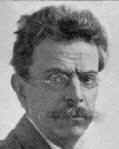
Enric Morera i Viura (1865-1942)
Works:
Chansons:
Cançons de carrer – 1926
Cançons populars catalanes
harmonitzades -1910
Dotze cançons del Llibre de la
Pàtria – 1936
La cançó dels catalans – 1930
La Marieta de l’ullviu – 1926
Masses:
Missa de rèquiem – 1899
Lyric works:
Andreu el navegant
Bruniselda – 1906
Dansa del gnoms – 1893
Don Joan de Serrallonga 1907
El castell dels tres dragons –
1931
El comte Arnau – 1905
El Ferrer de Tall
Jesús de Nazareth – 1894
L’alegria que passa – 1898
La Santa Espina – 1907
La viola d’or
La nit de l’amor 1901
Les monges de Sant Aiman
Nit de Nadal
Symphonic works:
Catalònia
Concert per a violoncel i
orquestra -1917
Minuet per a quartet de corda
-1889
Sonata per a violí i piano
Operas:
La fada – 1897
Empòrium – 1906
Titaina – 1912
Tassarba – 1916
Symphonic poems:
Introducció a l’Atlántida -1893
El poema de la Nit i el Dia i de la
Terra i de l’Amor – 1920
Sardanes (Catalan popular dances):
Baixant de la font del gat – 1926
Catalunya
Enyorança
Girona
La nostra Roser – 1941
La sardana de la Pàtria – 1921
La sardana de les monges – 1919
L’Empordà
Les fulles seques – 1909
Les neus que es fonen
Mar lliure – 1935
Serra amunt
Life:
Born in Barcelona the 22 May 1865.
From his childhood, he went with his fathers to Buenos Aires – Argentina -. The father, a musician, helped him in his first musical studies in that city and later – 1875 – in Córdoba also in Argentina. Before his return to Barcelona, the young Morera was commissioned by the Argentinean government to write some compositions as “Himno a la patria” and “Mayo”.
The year 1883 he comes back to Barcelona where he immediately know the most important musicians of Catalonia at that time as Isaac Albéniz and followed his musical studies with the masters Vidiella (piano) and Felip Pedrell (composition). Compositions as “Introducció a l’Atlàntida” – 1893 – where wrote in that period. Enric Morera conducting the Choral “Catalunya Nova”.
Lately, he lived for two years in Brussels where he perfection his musical knowledge’s with Paul Gilson and Philippe Févez, and later he went again to Argentina. Finally he returned definitely to Barcelona in the year 1890 starting a very active musical activity, being in a short period of time one of the most representative musicians of the Catalan musical Modernisme (Art Nouveau). An example of the music he wrote in that period is the opera “La fada” (The fairy) showed for the first time during the “Quarta Festa Modernista” (The forth Modernist – Art Nouveau – Festival) organized by Rusiñol in Sitges in the year 1987 specially devoted to the music.
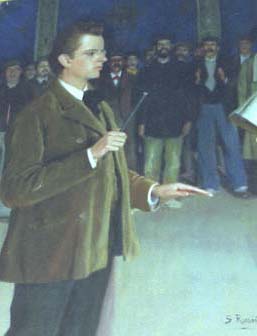
Before, in 1895, he founded the choral “Catalunya Nova”.
The activity and vitality of Morera is exceptional, he wrote more of 800 compositions: concerts, chorals, scenic music, symphonic works, operas, sardanes (national Catalan dances), etc., some of which are mentioned in his Works.
Morera is a brilliant example of musical Catalan nationalism. Some of his works are today part of the national Catalan most appreciated compositions as La santa espina, L’Empordà, Les fulles seques, La sardana de les monges, etc.
Morera was also the author of some books on musical theory as “Tractat pràctic d’harmonia” (Practical treaty on harmony). He also wrote a book on memories “Moments viscuts” published in the year 1936.
Morera died in Barcelona the 12 March of the year 1942.
Painting by Santiago Rusiñol representing Enric Morera conducting the Choral “Catalunya Nova”.
Specific Bibliography |
|||
| Title of the book | Author | Published by | Year |
| Sitges en el temps del Modernisme – Sitges i les Festes Modernistes | Coll, Isabel | Agència de promoció turística / Diputació de Barcelona / Institut d’Edicions | 2000 |
| Gran enciclopèdia catalana | Different authors | Enciclopèdia Catalana | |
Other Art Nouveau Catalan Musicians:
—Isaac ALBÉNIZ i Pascual—Enric GRANADOS i Campiña—Joan LAMOTE DE GRIGNON i Bocquet–Antoni Laporta i Astort–APEL·LES MESTRES i Oñós–Lluís MILLET i Pagès—Enric MORERA i Viura–Antoni NICOLAU i Parera–Jaume Pahissa i Jo–Felip Pedrell i Sabaté–Josep Ribas i Gabriel–Amadeu Vives i Roig
